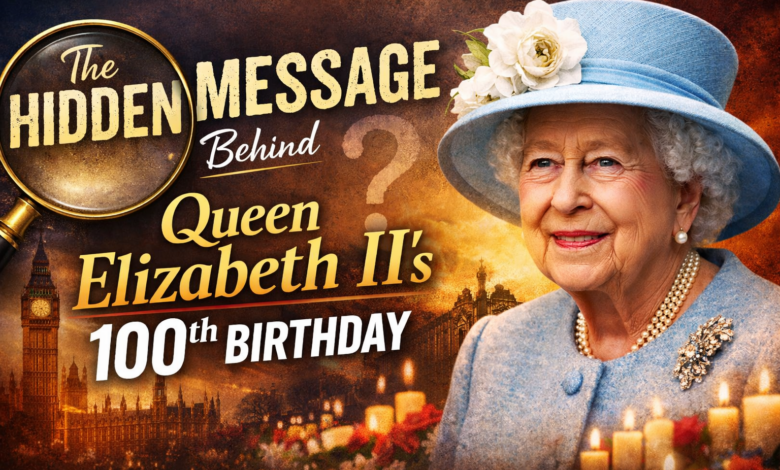
On what would have been Her Majesty’s 100th birthday, a carefully orchestrated day of national remembrance blends royal tradition with forward-looking symbolism — offering a masterclass in institutional memory and soft power.
She was never meant to be Queen. Born as the first child of the Duke and Duchess of York on April 21, 1926, Princess Elizabeth Alexandra Mary occupied a comfortable but indirect position in the line of succession. The abdication crisis of 1936 changed everything. Within a decade, the young woman who had broadcast wartime reassurances to evacuated children over BBC radio would become the most recognizable human being on the planet — a figure whose face graced the currency of more than thirty nations and whose annual Christmas address drew hundreds of millions of viewers from Lagos to Auckland.
One hundred years after her birth, the United Kingdom is pausing to remember. Not with the pomp of a state funeral or the pageantry of a coronation, but with something more considered — a coordinated day of institutional memory, personal tribute, and permanent legacy-building that reflects both the gravity of the occasion and the new monarchy’s determination to define itself through service rather than spectacle.
Few images carry more symbolic weight in modern British public life than the sight of a monarch speaking directly to the nation in a moment of collective feeling. King Charles III’s decision to film his centenary address in the library of Balmoral Castle is not merely sentimental — it is a piece of careful constitutional storytelling. Balmoral was the late Queen’s sanctuary, her retreat from the ceaseless demands of public duty, and the place where, on the morning of September 8, 2022, her long life reached its quiet conclusion. By choosing to speak from those walls, Charles collapses the distance between mourning and celebration, between his mother as a private woman and as a public institution.
The address, filmed in early March 2026 and released at midnight on April 21st, frames the entire commemorative day that follows. Midnight releases are unusual for royal communications — the tradition favors Sunday morning broadcast addresses or formal statements at mid-morning. The midnight timing instead signals an alignment with personal emotion: this is a son speaking about his mother at the hour when reflection and sentiment run highest, inviting the nation into something intimate before the public programme begins in daylight.
“In choosing Balmoral — the place she loved most, the place she left from — The King is signaling that this centenary belongs not just to the institution but to the woman herself. That is a significant and deliberate act of humanization.”
The speech itself, in keeping with what Buckingham Palace has previewed as a “heartfelt address,” is expected to walk the line that Charles has consistently attempted to draw since accession: honoring the legacy he inherited while staking out his own, distinctive vision for the Crown. Historians of the modern monarchy will note that no British sovereign has assumed the throne under greater public scrutiny of their personal character, nor under a more difficult cultural moment for hereditary institutions globally. How Charles speaks about his mother — and by extension about duty, continuity, and service — will be read carefully both domestically and abroad.
Of all the day’s events, none will attract more long-term scrutiny than the royal family’s visit to the British Museum to view Lord Norman Foster’s scale model for The Queen Elizabeth Memorial. Foster — now in his nineties but still operating at the forefront of civic architecture — brings to this commission the same philosophy that shaped his Reichstag dome in Berlin and the Great Court at the British Museum itself: the belief that public architecture should be transparent, inclusive, and built to outlast the controversies of the moment.
The choice of Foster as designer was itself a statement. Britain has a complicated history with royal memorials. The Victoria Memorial outside Buckingham Palace, unveiled in 1911 and criticized at the time as overly grandiose, took fourteen years to complete after the Queen’s death. The Diana, Princess of Wales Memorial Fountain in Hyde Park — a more contemporary and contested project — drew accusations of being insufficiently permanent and emotionally inadequate when it opened in 2004. The selection of one of the world’s most acclaimed living architects suggests a determination to avoid both failure modes: Foster’s reputation for civic grandeur ensures scale and permanence, while his characteristic lightness of touch guards against the accusation of bombast.
The reception at the British Museum, attended by the Prime Minister, places the memorial project in an explicitly political context. Royal monuments of this significance require parliamentary approval and public funding allocation — they are, at their core, acts of state as much as acts of grief. The Prime Minister’s presence signals cross-party consensus on the project’s importance and, implicitly, on the enduring political utility of Elizabeth II’s legacy as a unifying national symbol at a time when very little else commands such consensus.
There is a poetic aptness to Princess Anne officially opening The Queen Elizabeth II Garden in Regent’s Park. Of all the Queen’s children, Anne has most consistently embodied her mother’s documented preference for function over flourish, duty over display. The Princess Royal has carried out more public engagements per year than any other member of the royal family for decades — a fact that earns her consistent high approval ratings while generating relatively little media coverage precisely because she eschews the drama that attracts it.
Gardens as memorial spaces carry particular resonance in British culture. The tradition of dedicating green spaces to public figures — from the Kensington Memorial Garden to the countless municipal parks bearing Victoria’s name — reflects an understanding that a nation’s relationship with its honored dead is best mediated through living, growing things. A garden changes with the seasons, requires tending, invites return. It is a fundamentally different kind of memorial to a bronze statue or a marble plinth: participatory, democratic, and perpetually unfinished.
Regent’s Park, designed by John Nash in the early nineteenth century and one of the Royal Parks of London, is not an accidental location. Its position in the heart of the capital, accessible to Londoners of every background and to millions of annual tourists, ensures that the garden will function not as a niche heritage site but as a living element of the city’s public life. The Queen, who was patron of the Royal Horticultural Society and who maintained a well-documented personal passion for the gardens at Sandringham, would likely have approved.
The exhibition Queen Elizabeth II: Her Life in Style at The King’s Gallery — visited by King Charles and Queen Camilla as part of the centenary programme — is perhaps the most culturally revealing element of the day’s events. Clothing and fashion have always occupied an unusual position in the semiotics of queenship. For most of human history, the garments of female monarchs have been treated as incidental to their political significance, or worse, as evidence of vanity. The framing of Elizabeth II’s wardrobe as a narrative medium — as a form of biography no less valid than her speeches or her state papers — represents a meaningful scholarly and cultural recalibration.
Over her 70-year reign, the Queen’s wardrobe became one of the most studied and debated aesthetic archives in modern history. Her use of bold, solid colors — famously explained by her dresser and confidante Angela Kelly as a practical necessity for visibility in crowds — evolved into a sophisticated visual language. The choice to wear green to a Remembrance Sunday service or the particular shade of blue selected for a Commonwealth summit was not random: it was a form of communication conducted without words, understood by the public on an intuitive level even when they couldn’t articulate why.
The exhibition’s placement at The King’s Gallery, housed within Buckingham Palace, is significant. The gallery itself — opened by the Queen in 1962 to share the Royal Collection with the public — was one of Elizabeth’s most important contributions to the democratization of royal heritage. Bringing the fashion exhibition here closes a circle: the building and institution she helped create to open the monarchy’s treasures to public view now houses an intimate examination of her own personal legacy.
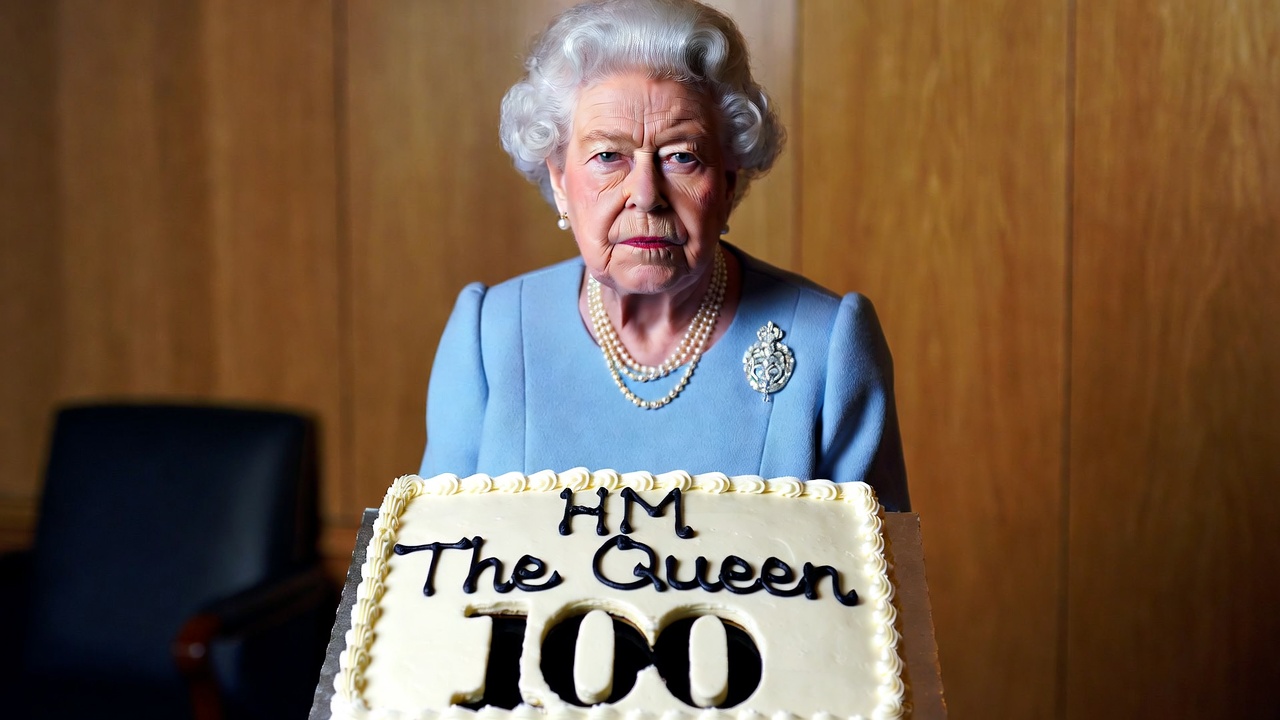
The Buckingham Palace reception on the evening of April 21st synthesizes the day’s themes into a single, layered event. The guest list — drawn from charities and organizations associated with the late Queen, including Cancer Research UK, the Jockey Club, and the Army Benevolent Fund — is a précis of her interests, passions, and public commitments. Cancer Research reflects her decades-long engagement with medical philanthropy and the devastating personal losses to cancer within her own family. The Jockey Club honors what was, by all accounts, a genuine and deeply held personal passion for horseracing — one of the few arenas in which the Queen was seen to drop the professional distance that characterised her public persona and express uncomplicated joy. The Army Benevolent Fund connects to her wartime service and her lifelong identification with the armed forces, whose obedient service to the Crown she both embodied and championed.
But the most humanly resonant element of the reception is the inclusion of centenarians — British citizens who, like the Queen herself, were born in 1926. The tradition of the monarch sending birthday cards to subjects celebrating their 100th birthday was established by King George V in 1917 and has become one of the Crown’s most beloved and intimate gestures. More than 6,000 such cards are now sent annually. That King Charles will personally present centenary cards to some of the Queen’s contemporaries at this reception is an act of deliberate and profound symbolism: these are the men and women who grew up in the same world she did, who lived through the same history, and who now survive into the same remarkable age. In honoring them, Charles honors the generation that made modern Britain — and honors his mother as a member of it, rather than above it.
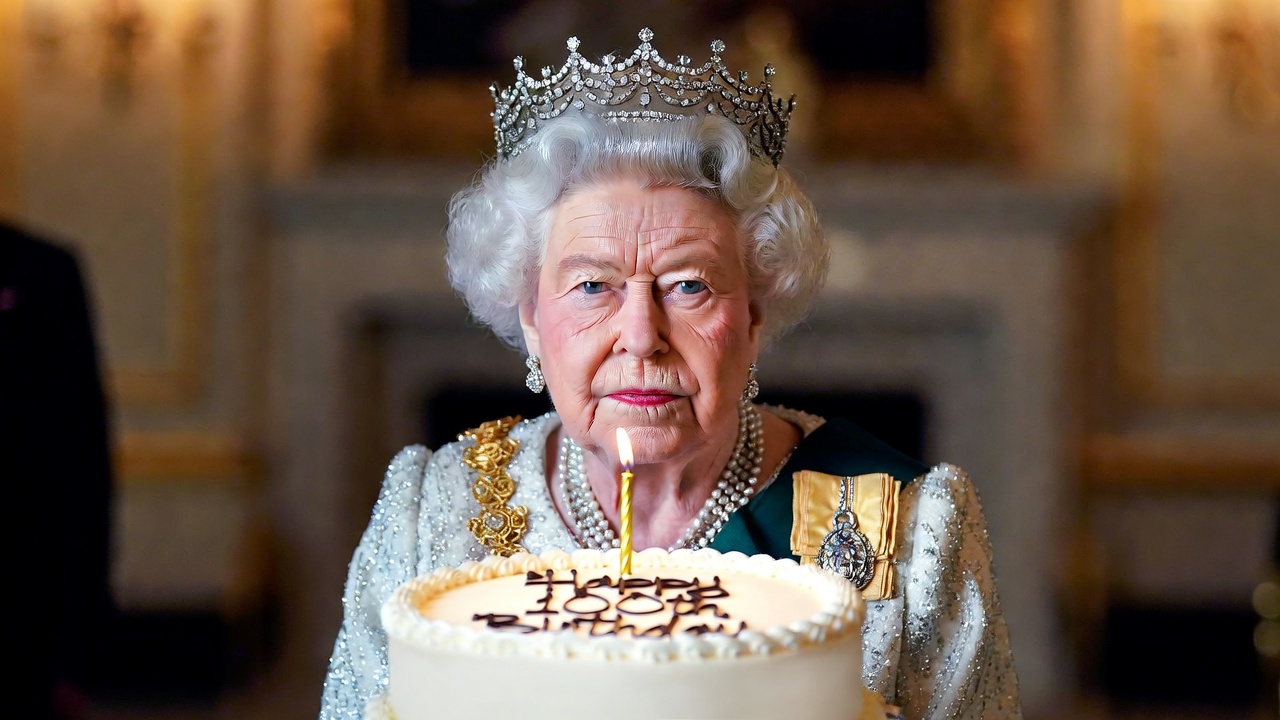
Buckingham Palace’s release of two short video reels on its public social media accounts on the centenary may appear, at first glance, to be a minor footnote to the main programme of events. In fact, it represents something significant about the evolving communication strategy of the modern monarchy. Elizabeth II was famously ambivalent about social media — her household established official accounts, but she never engaged with digital platforms in any personal or direct way. The reels released in her memory are therefore not artifacts of her own public relations instincts, but of her son’s.
Short-form video content — the currency of Instagram Reels, TikTok, and YouTube Shorts — reaches audiences that traditional royal broadcasting does not. The centenary reels speak to a generation for whom Elizabeth II is a historical figure rather than a living memory, presenting her life and legacy in a format calibrated to their attention spans and media habits. This is not a trivialization of her legacy; it is an acknowledgment that legacy-maintenance requires constant translation into the languages of new generations. The Royal Family’s social media accounts now have tens of millions of followers — more than enough to ensure that the centenary reaches people who will never watch a formal televised address or visit a gallery exhibition.
Taken together, the day’s events compose something like a manifesto — or at least a working hypothesis — about what the British monarchy believes it is for in the twenty-first century. The emphasis on permanence (a major national memorial), on democratic access (a public garden, a gallery open to visitors), on lived experience (fashion, horticulture, personal charity work), and on human connection (centenarian card presentations, a midnight address from a son to a nation) suggests an institution that is trying, with considerable sophistication, to demonstrate relevance without demanding deference.
This is the central challenge that King Charles has faced since his accession — and that his mother, paradoxically, made both easier and harder. Easier, because she left him a reservoir of goodwill and institutional affection that has no modern equivalent. Harder, because no one will ever occupy the particular cultural space that she occupied: the last living link to a world before television, before the internet, before the collapse of empire; a figure whose consistency over seven decades came to feel like a natural phenomenon rather than a human achievement.
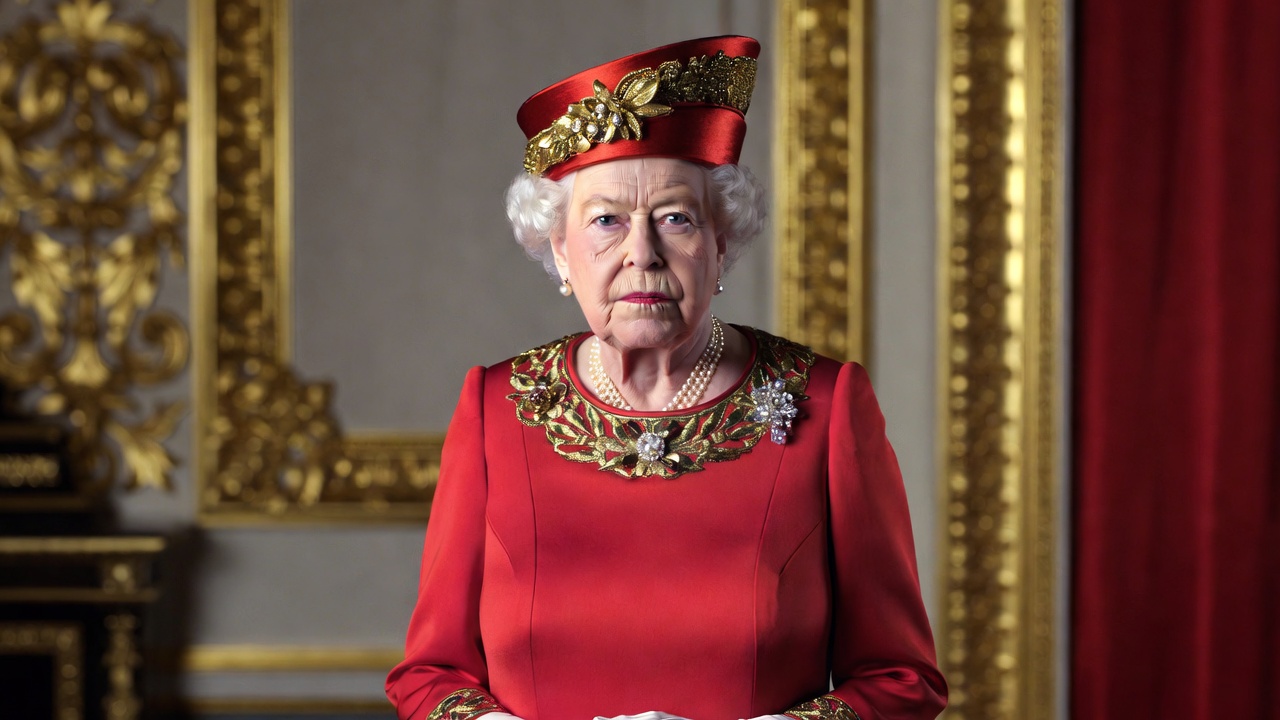
Charles cannot be his mother, nor should he try. But the centenary programme suggests that he has found a workable approach: to honor her memory with the full weight of institutional resources while quietly using each commemoration as an opportunity to introduce his own emphases — sustainability, artistic engagement, interfaith understanding — into the national conversation. The Foster memorial, the fashion exhibition, the garden in Regent’s Park: each will outlast the day itself, becoming permanent features of the national landscape that bear the Queen’s name but were chosen and championed under her son.
One hundred is a number that carries its own gravitas. When the Palace announced the centenary programme, there was a brief public debate about whether it was appropriate to celebrate the birthday of someone who had been dead for nearly four years. The events of April 21, 2026, answer that question definitively: this is not a birthday party. It is a civilizational audit — a moment for a nation to assess what it received from one person’s extraordinary, improbable, quietly heroic life, and to decide what it intends to keep.
Elizabeth II left the monarchy more popular than she found it, more accessible than her predecessors made it, and more institutionally resilient than many thought possible in the turbulent decades of the late twentieth century. Whether that resilience will survive the next hundred years is a question no one can answer. But on April 21, 2026, in a castle library in the Scottish Highlands and a park in the heart of London and a gallery in a palace courtyard, Britain is choosing to remember — and in remembering, to recommit to the idea that continuity, service, and quiet dignity are not antique virtues but necessary ones.
Happy centenary, Your Majesty.